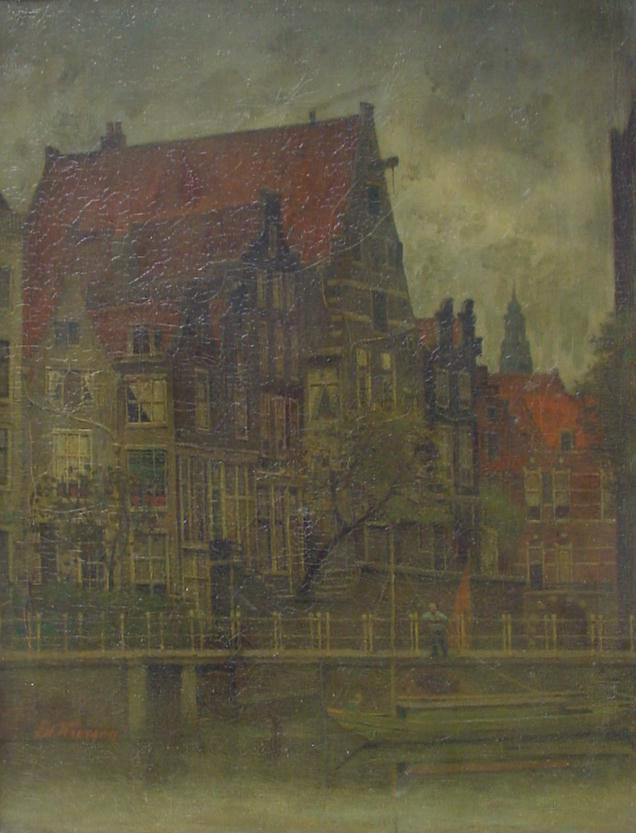
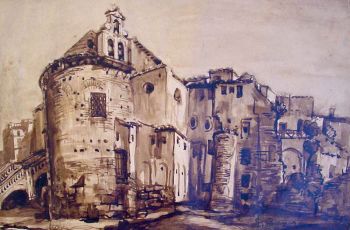
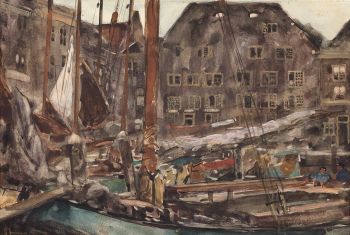
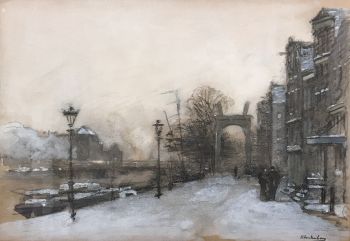
Johann Eduard Karsen was born on 10 March 1860 in Amsterdam as the son of the painter Kaspar Karsen, known for his romantic cityscapes. At a young age, Eduard became imbued with painting, but he developed a very personal style and theme, far removed from the work of his father. Where Kaspar idealised city life, Eduard sought the silence, emptiness and psychological charge of landscape and architecture.
Karsen studied at the Rijksakademie van Beeldende Kunsten in Amsterdam, where he was taught by August Allebé, among others. In the 1880s, he joined the artists' association Sint Lucas and later also the avant-garde group around the magazine De Nieuwe Gids. He moved in the circle of the Tachtigers – literary and artistic innovators who placed feeling and individuality above academic rules.
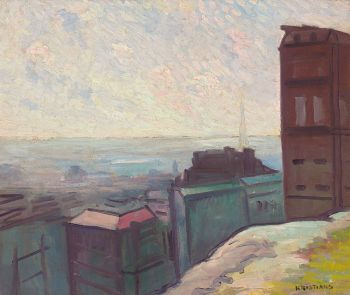
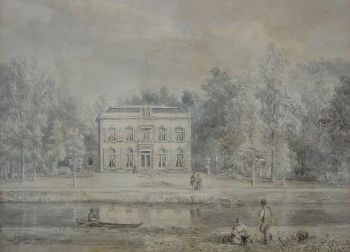
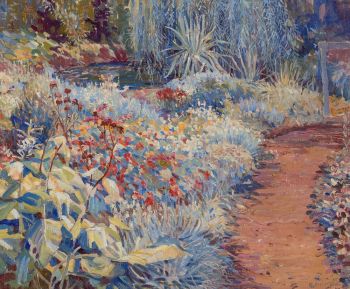
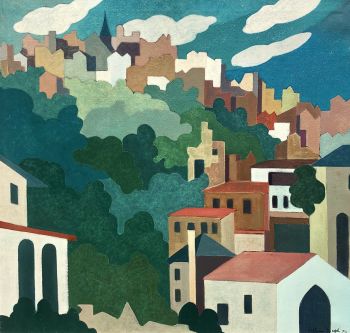
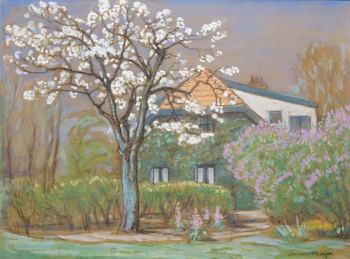
His paintings often show tranquil landscapes with a lonely tree, a deserted country road or a house that stands like a silent monument in the distance. These scenes are not naturalistic but rather symbolically charged – as if they are carriers of an inner world, characterised by melancholy, distance and introspection. His use of colour is sober, often composed of brown and green tones, with accents in red or ochre. The compositions are tight and rhythmic, sometimes almost graphic.
Karsen worked slowly and thoughtfully, and sold his work in small quantities. His artistry was not a route to fame, but a personal quest. Although he was respected in artistic circles, he was known as closed, melancholic and withdrawn. His works sometimes remind us of the later symbolists or even the early De Chirico, with their mysterious emptiness.
A tragic aspect of his life was his unrequited love for artist Barbara van Houten. This unrequited passion left a lasting impression on him, which according to some remains palpable in his work: the distance, the loss, the silent landscape as a mirror of the inner self.
Johann Eduard Karsen died on 31 October 1941 in Amsterdam. His oeuvre is small but penetrating. Today he is considered one of the most important representatives of the symbolic-realistic landscape in the Netherlands. His paintings do not invite a quick glance, but silence — and linger as whispering memories of a world behind things.