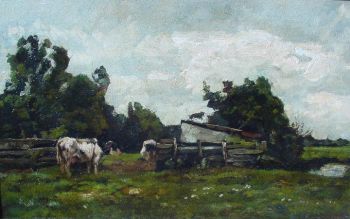
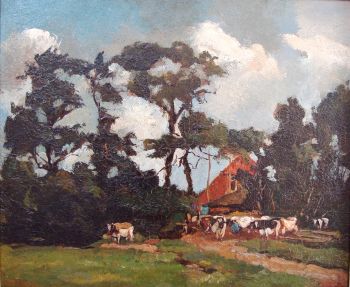
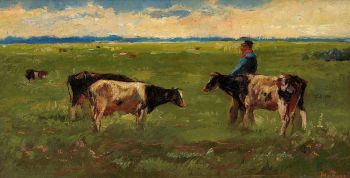
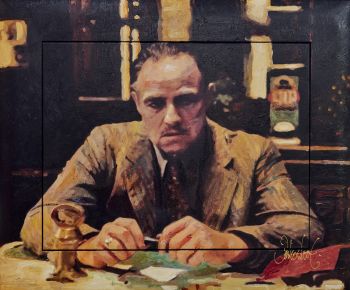
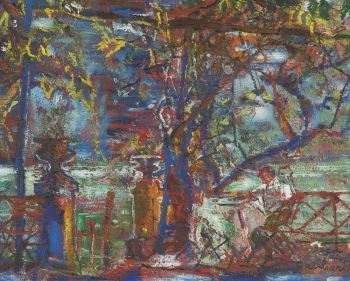
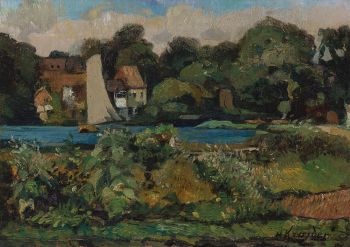
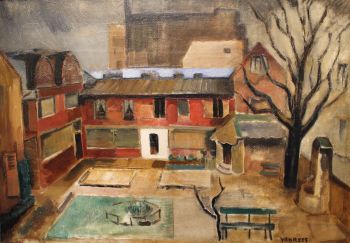
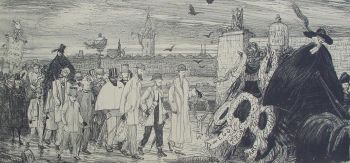
Willem de Zwart (The Hague, 1862 – The Hague, 1931) was an influential Dutch painter, draughtsman and etcher, who is considered to belong to the Hague School, but who also developed into a colourful and expressive artist with his own signature. He is often referred to as the “Dutch Manet” because of his loose brushstrokes, modern subjects and strikingly lively palette.
De Zwart was educated at the Hague Academy of Fine Arts and was a pupil of Jacob Maris, from whom he learned the trade thoroughly. The influence of the Hague School is clearly recognisable in his early work: atmospheric landscapes, farm interiors and cityscapes in muted tones. But he soon broke with the subdued character of this style and developed a more dynamic and colourful way of painting, influenced by French Impressionism.
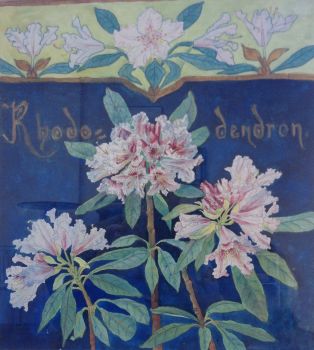
He worked in The Hague, Amsterdam, Loosduinen, Rijswijk and Scheveningen, where he captured everyday scenes: market women, workhorses, street life, interiors, but also floral still lifes and portraits. His work exudes movement and directness; brushwork and use of colour are spontaneous and powerful, making him one of the most modern representatives of his generation.
De Zwart was a member of Pulchri Studio in The Hague and Arti et Amicitiae in Amsterdam and took part in numerous exhibitions at home and abroad. Although he enjoyed recognition during his lifetime, he lived his last years in poverty and was forgotten for some time after his death. In the second half of the 20th century, there was renewed interest in his work, which has since been appreciated for its combination of technical virtuosity and modern flair.
Willem de Zwart leaves behind a powerful, expressive and timeless oeuvre that builds bridges between tradition and innovation — an artist who managed to capture the Dutch light in hues that sparkle with life.