Scroll to zoom, click for slideshow
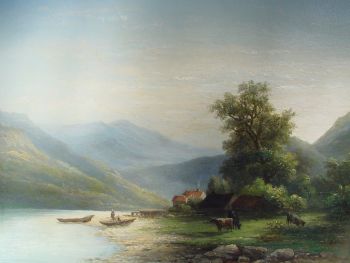
Gezicht op het strand bij Lago d'Orta (Italië) 1959
Johan Dijkstra
56 ⨯ 76 cm
Price on request
Bruning Heintz Fine Art
- About the artwork
- About the artist
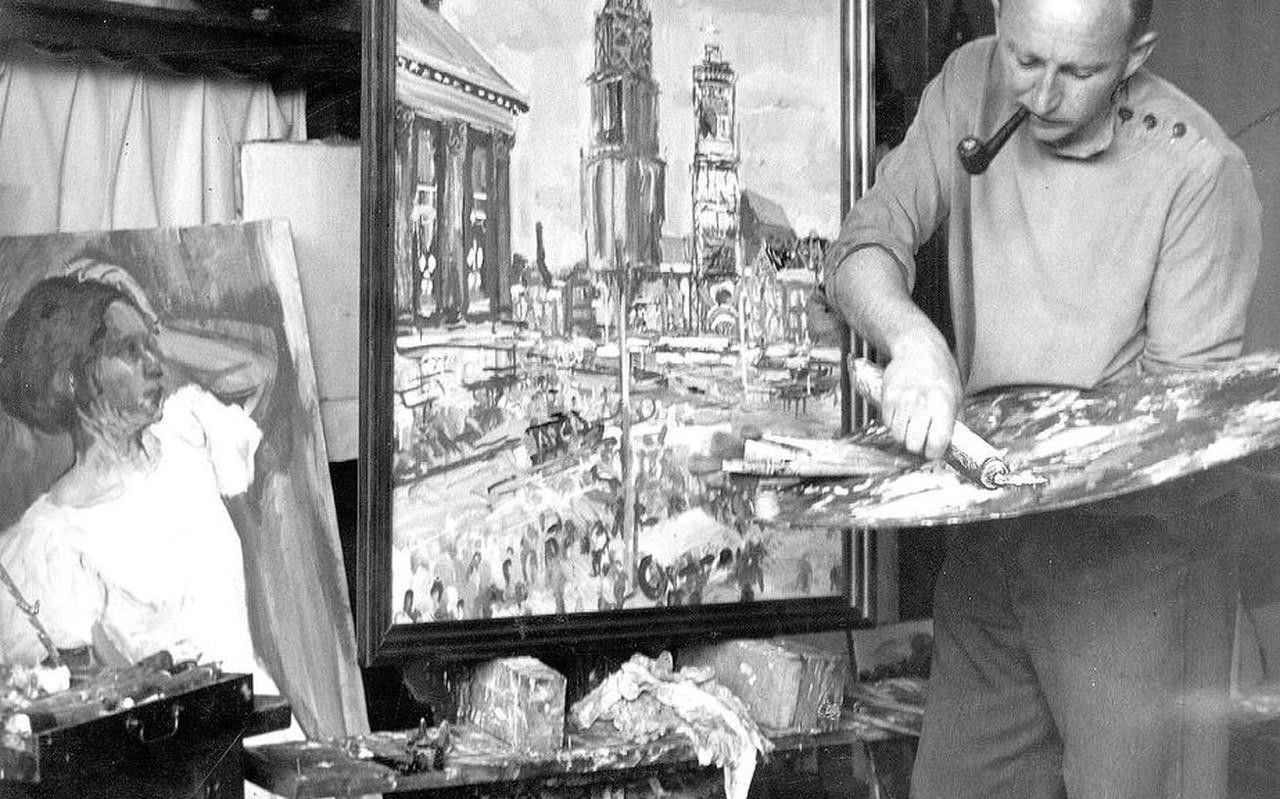
Johan Dijkstra was a great Dutch expressionist. He lived and worked in Groningen, where he was part of the Ploegschilderskring together with artists such as Jan Wiegers and Jan Altink. His subject was mainly the local landscape and portraits.
He also made expressive sketches of everyday life on the street and in the cafes. Under the influence of German Expressionism, Kirchner's use of color became increasingly bold between 1923 and 1929 and his forms became freer.
Johan Dijkstra attended the three-year HBS and from 1915 took afternoon classes at the Minerva Academy. In 1919 he was awarded the bronze academy medal for his work.
From 1919 to 1920 he studied at the Rijksacademie in Amsterdam, where he obtained the M.O. certificate in 1920. Signs achieved. Johan Dijkstra was one of the founders of De Ploeg, but was unable to attend in the early years due to his stay in Amsterdam. Back in Groningen he provided for his livelihood by making illustrations and advertising work. In April 1923 Dijkstra and Altink and Wiegers organized the first anniversary party of De Ploeg at Blauwbörgje, a place just outside the city where a lot of painting was done by the Ploegleden.
From the beginning of 1926 until 1940 Dijkstra exhibited outside Groningen almost every year. He also had solo exhibitions in Groningen with Pictura, in Amsterdam and The Hague. Between 1928 and 1940 he no longer held any board positions at De Ploeg, but he did his best to increase the number of members. In this he had Werkman as his opponent. Since 1930 he wrote reviews for the Provinciale Groninger Courant, which made him part of the establishment for many.
Are you interested in buying this artwork?
Related artworks


Ekke Kleima
Twee boerderijen in Noord-Nederlands landschap1920 - 1960
Price on requestBruning Heintz Fine Art









Dirk Smorenberg
Winters gezicht op Loosdrechtse plas1920 - 1930
Price on requestBruning Heintz Fine Art




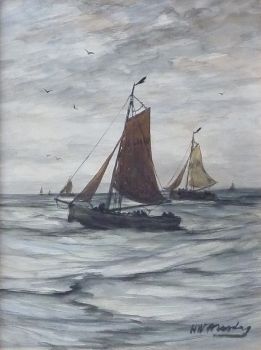
Dirk Smorenberg
Zeilboten op de Loosdrechtseplasssen1920 - 1930
Price on requestBruning Heintz Fine Art











Jan Sluijters
Overtoomse sluis te Amsterdam met sneeuw (voor 1925)1910 - 1925
Price on requestBruning Heintz Fine Art

Frans Hogerwaard
Zicht op Parijs vanaf Parc de Saint-Cloud1900 - 1920
Price on requestBruning Heintz Fine Art

Cornelis Vreedenburgh
Het atelier van de schilder aan de Vredelaan 1 te Laren1920 - 1940
Price on requestBruning Heintz Fine Art