Wybrand Hendriks (1744–1831) was a versatile Dutch artist, best known for his lively portraits and refined still lifes. Born in Amsterdam but making his mark in Haarlem, Hendriks became a key figure in the art world of his time, both as a painter and as an organizer.
Hendriks did not start his career as an artist right away. He initially worked as a tapestry painter, a craft in which precision and a sense of texture were essential. This early experience would permanently characterize his later work: his paintings are distinguished by an almost tangible attention to materials and details.
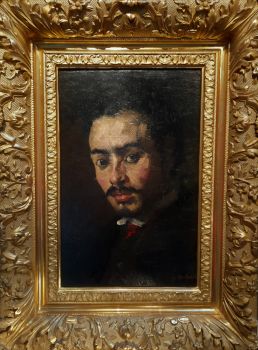
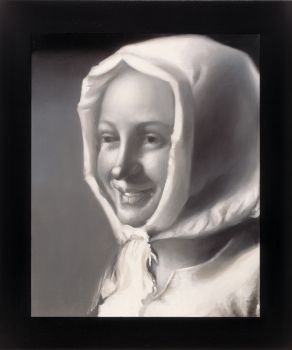
Around the age of thirty, Hendriks established himself as an independent painter and made his breakthrough as a portraitist. His portraits are remarkable for their freshness and empathetic representation of the subjects — no stiff poses, but people who seem to breathe, think and feel. As a result, he acquired commissions from the upper echelons of Haarlem and Amsterdam.
In 1785, Hendriks was appointed innkeeper (manager) of the Teylers Museum in Haarlem, then a young and innovative institution. In this position, he not only managed the art collection, but also actively expanded it. His keen eye for quality and his network in the art world ensured that Teylers acquired important pieces under his leadership, including works by contemporaries and old masters.
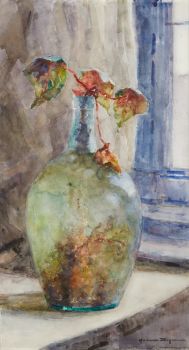
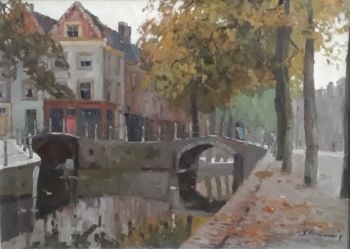
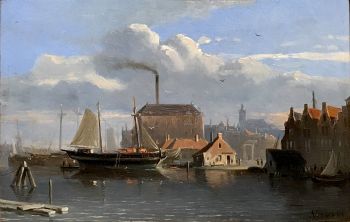
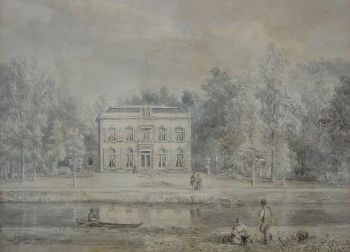
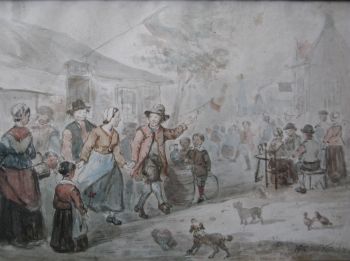
In addition to his administrative work, Hendriks continued to paint actively. In addition to portraits, his oeuvre also includes rich still lifes, architectural views and genre pieces. His still lifes in particular, in which flowers, fruits and utensils seem almost tangible, demonstrate his exceptional technical ingenuity.
Wybrand Hendriks was known for his inquisitive mind and his open view. In a time when many artists clung to tradition, he was open to new influences, including from English painting, which seeped into his later work.
He died in 1831 in Haarlem, the city where he celebrated his greatest triumphs. His influence lives on, not only in his own paintings, but also in the collection of the Teylers Museum, which he helped shape and which continues to inspire visitors today.