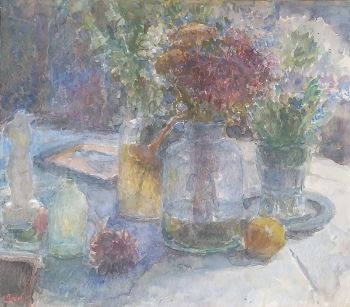
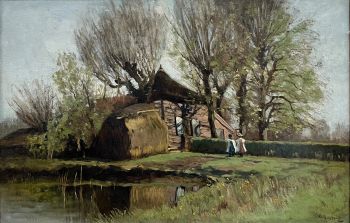
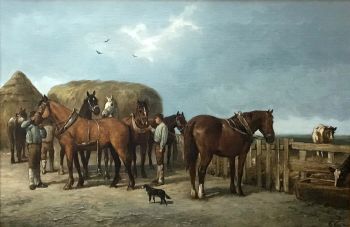
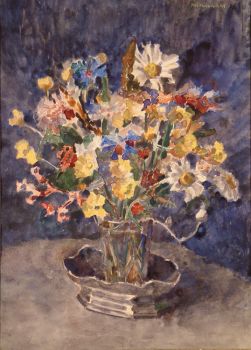
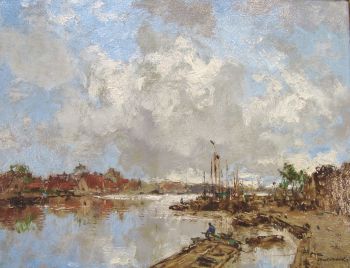
Louis Raemaekers was a Dutch artist who rose to become one of the most influential political cartoonists of the twentieth century. He was born in 1869 in Roermond and trained at the Royal Academy of Visual Arts in Amsterdam. In his early career, he focused primarily on painting, with landscapes and portraits as his main subjects.
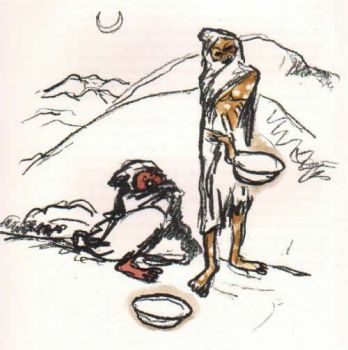
His life and work took a decisive turn with the outbreak of the First World War. Although the Netherlands remained neutral, Raemaekers emphatically took a stand. As a cartoonist for the newspaper De Telegraaf, he published sharp, emotionally charged satirical cartoons in which he fiercely criticized the German conduct of the war. His images—often grim, direct, and morally unambiguous—emphasized the human suffering and devastation of the war.
The impact of his work extended far beyond the Netherlands. His prints were distributed internationally, including in Great Britain and the United States, where they played a significant role in shaping public opinion against Germany. The German authorities regarded him as a dangerous propagandist; There was even said to be a bounty on his head. Due to political pressure and tensions, Raemaekers left the Netherlands and settled temporarily in London.
What distinguished Raemaekers was his ability to translate complex geopolitical conflicts into powerful, immediately understandable images. His style was focused less on aesthetic refinement than on moral urgency: he wanted to move, persuade, and mobilize. In doing so, he became a pioneer of the modern political cartoon, in which art and journalism merge.
After the war, Raemaekers remained active as an artist, although he never again achieved the same international influence as during the war years. He died in 1956, but his work remains a compelling example of how visual art can function as a political weapon and moral compass in times of conflict.