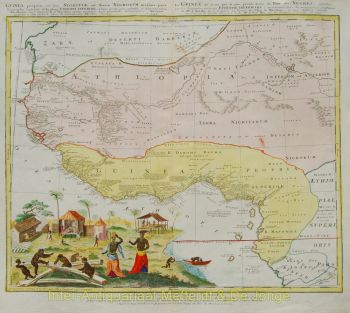
Johann Baptist Homann (1664–1724) was a leading German cartographer, engraver, and publisher of the early 18th century, widely regarded as one of the most influential mapmakers of his time. Born in Oberkammlach in Bavaria, he was initially educated at a Jesuit school before converting to Protestantism—a decision that would shape both his personal and professional path.
Homann began his career as a notary in Nürnberg in 1687, but soon shifted his focus to engraving and cartography, driven by a growing interest in geography and the visual representation of knowledge. After a formative period in Vienna between 1693 and 1695, he returned to Nürnberg, where he founded his own publishing house in 1702. This marked the beginning of a highly productive and influential career.
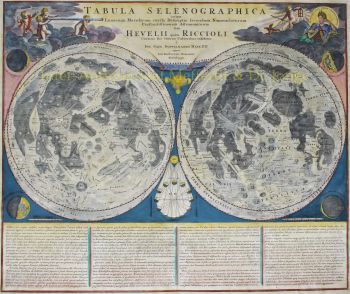
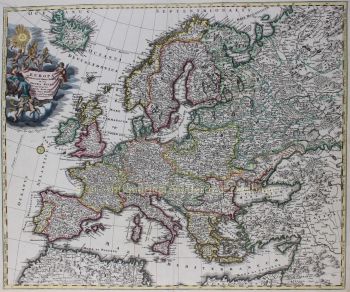
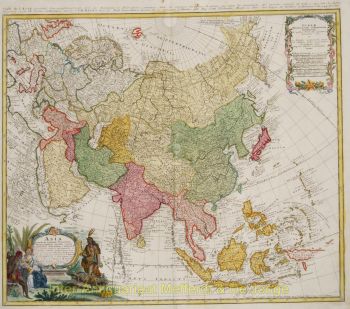
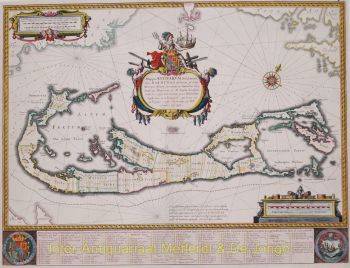
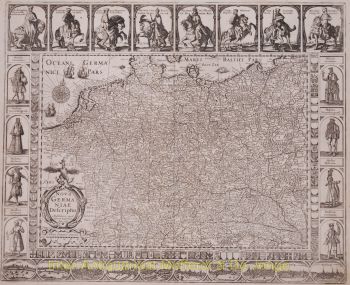
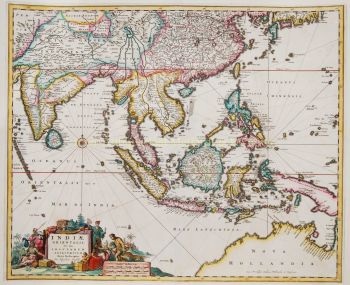
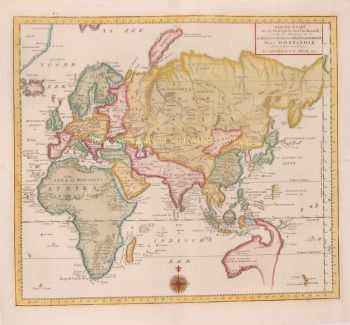
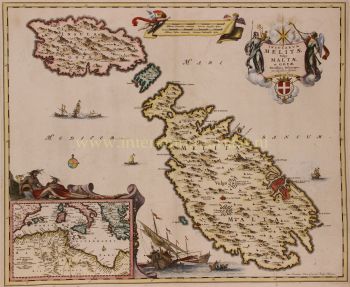
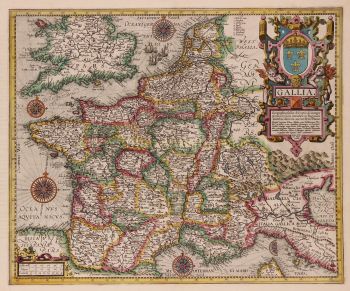
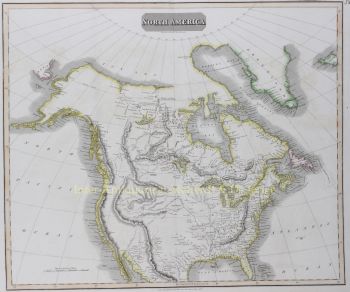
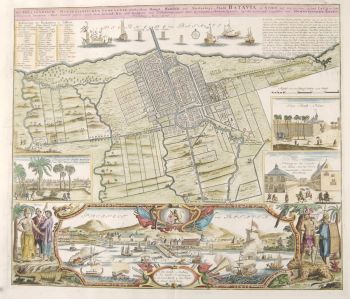
His maps quickly gained recognition for their precision, clarity, and decorative richness, combining scientific rigor with elaborate baroque ornamentation. Homann’s reputation led to his appointment as Imperial Geographer by Emperor Charles VI in 1715, and he was later elected to the Prussian Academy of Sciences in Berlin—an acknowledgment of his contribution to the advancement of geographic knowledge.
In 1716, Homann published his most renowned work, the Grosser Atlas über die ganze Welt (Grand Atlas of all the World), a comprehensive and ambitious collection of maps that consolidated his legacy. Many of these works were created in collaboration with engraver Christoph Weigel the Elder. Through his publishing house and cartographic output, Homann played a central role in establishing Nürnberg as a major center of map production in Europe.