About the artist
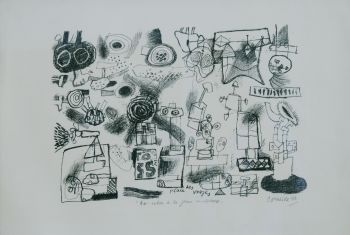
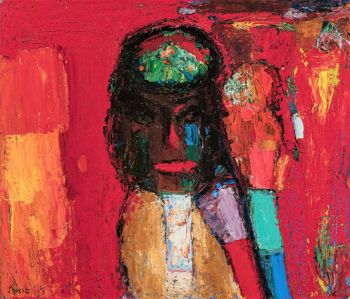
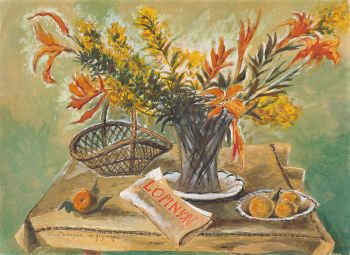
Engelbert L'Hoëst (Amersfoort, 15 September 1919 – Soesterberg, 9 December 2008) was a Dutch painter, known for his expressive landscapes, still lifes and portraits. His work is characterised by a lively use of colour and a dynamic brushwork, with which he managed to capture the essence of his subjects.
Youth and education
Born as the son of a postal worker, L'Hoëst lost his father before he was one year old. His mother encouraged him to draw, as he showed talent for it at school. At the age of fifteen he was apprenticed to the painter A.C. Sleeswijk in Soest, where he began to develop his own style. During this period he became involved with the Amersfoort artists' society De Ploegh, where he had several exhibitions and came into contact with progressive artists such as Remko Watjes and Douwe van der Zweep.
Career and travels
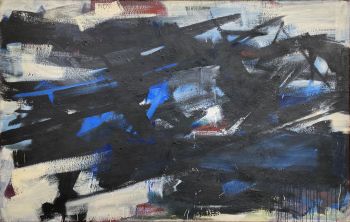
After the Second World War, in which his teacher Sleeswijk died, L'Hoëst inherited his studio with a view over the fields of the Soester Eng. Here he made impressions of evening skies, still lifes, landscapes and portraits. In 1959 a fire destroyed his house and studio, whereby almost all of his youthful works were lost. After this setback he bought a new house in Soesterberg, but soon left for France, Portugal and Germany to paint there. During these travels he further developed his own style in oil paint, acrylic, tempera and watercolour, and was influenced by the Cobra movement.
Style and influences
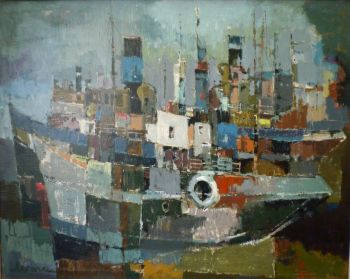
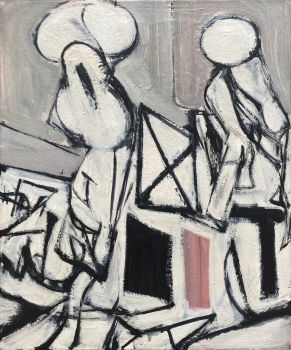
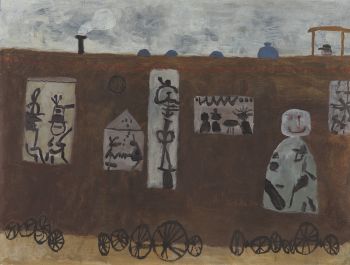
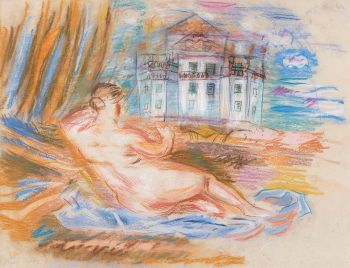
L'Hoëst's work is characterised by an expressive and colourful approach, in which he combined influences from artists such as Vincent van Gogh, Auguste Renoir and Claude Monet with elements from the Cobra style. His paintings often show dynamic compositions with an intense use of colour, resulting in lively and emotional representations.
Recognition and legacy
Although L'Hoëst regularly lived abroad during his life and was therefore less well-known in the Netherlands, his works were included in collections of collectors all over the world, especially in Germany, Canada and China. In the Netherlands he later gained recognition through retrospective exhibitions, including one in the Singer Museum in Laren. His work is still appreciated for its expressive power and contribution to modern Dutch painting.
Engelbert L'Hoëst died on 9 December 2008 in Soesterberg, but left behind a rich and diverse oeuvre that continues to inspire and garner admiration to this day.
Artworks
Filter Artworks
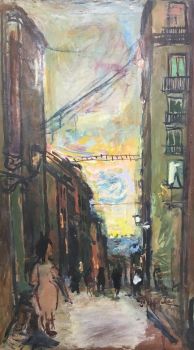
1 artwork for sale by Engelbert L'Hoëst
Related artworks for sale




Daum Nancy
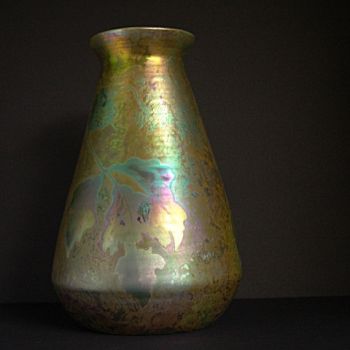
Daum Nancy – Tall Bryones / Bryonia dioica vase with applied berries1902 - 1907
Price on requestAntiques Emporium