Eduardo Alcoy
Eduard Alcoy i Lázaro
Barcelona, 1930 - Mataró, 1987
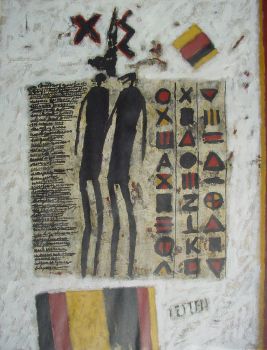
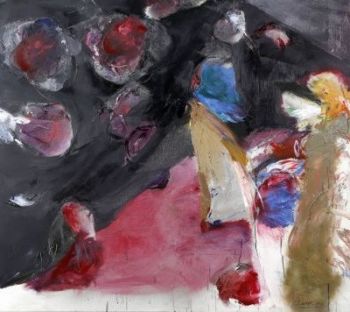
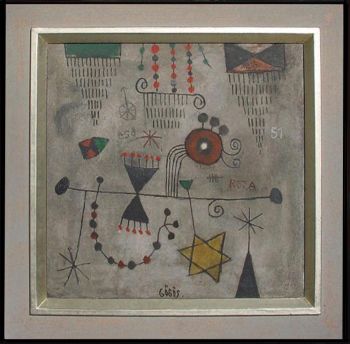
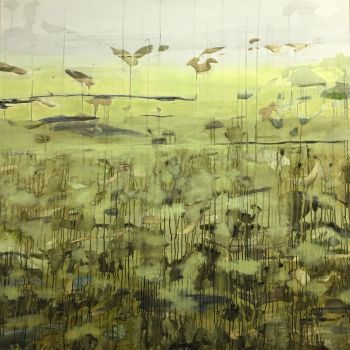
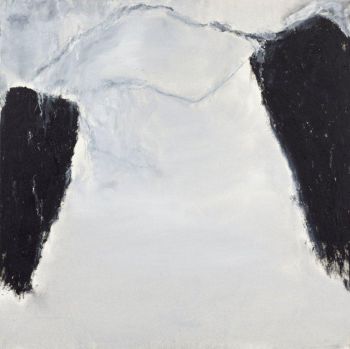
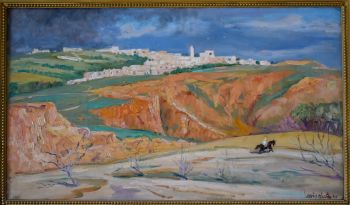
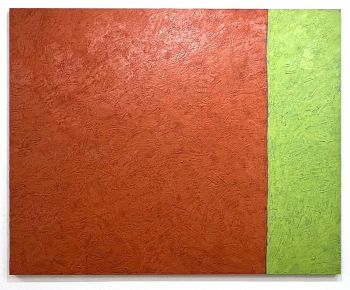
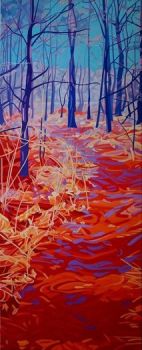
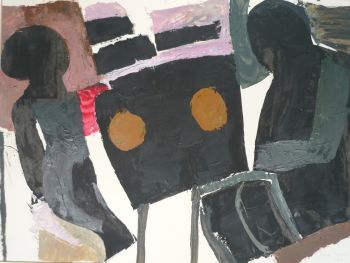
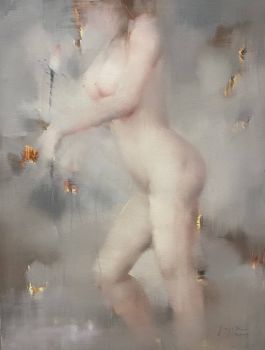
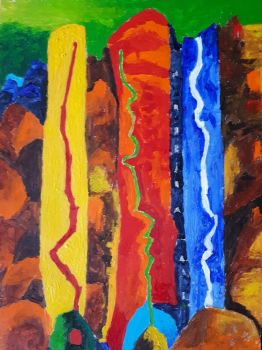
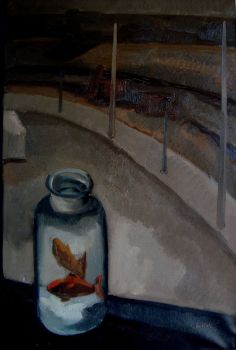
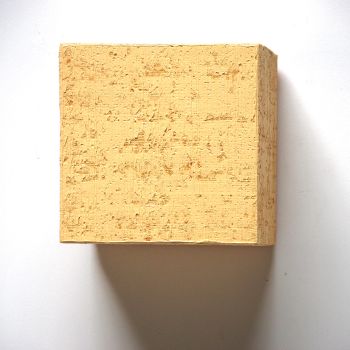
oil on board, 90x60 cm, dated 1959,signed,framed
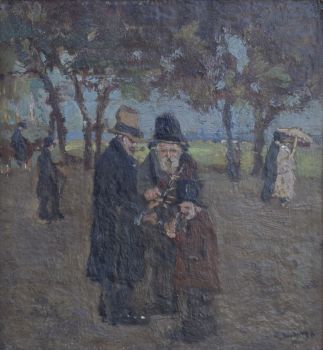
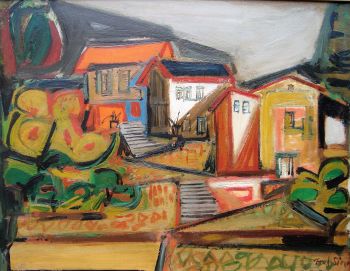
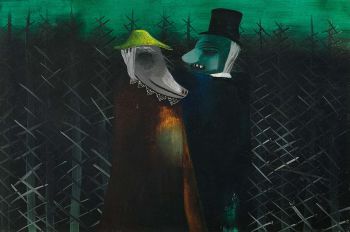
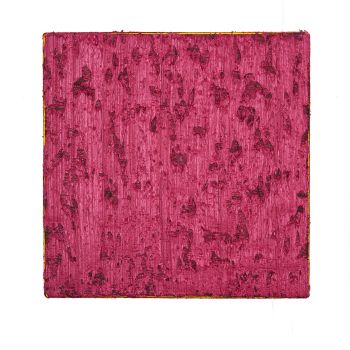
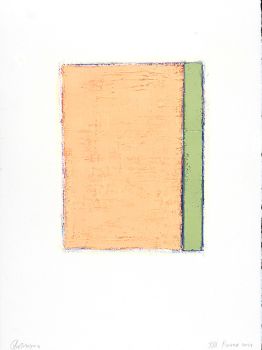
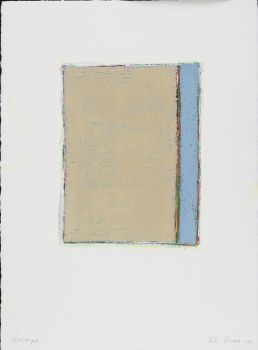
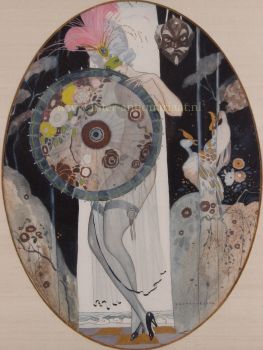
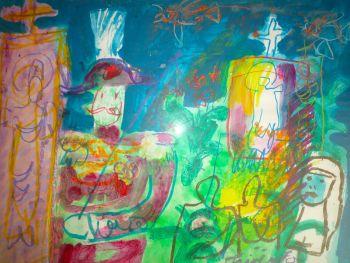
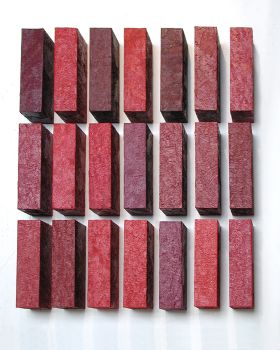
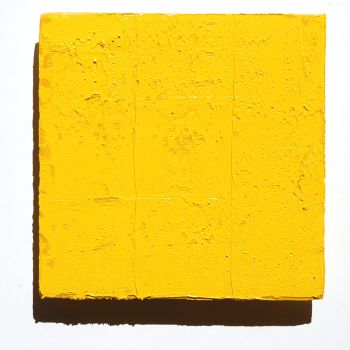
Starting with figurative work of an expressionist nature, in the mid-1950s Alcoy was a founding member of the Sílex Group and turned more towards geometric abstraction and informalism. In 1963 he ended his informalist period to return to figuration with work of a decidedly dreamlike character. Later, in the 1970s, he quit advertising and graphic design to concentrate on painting, while at the same time broadening his artistic remit to include other forms of expression, such as sculpture and jewellery. Up until his early death, his works of magical figuration displayed a range of constants such as landscape, madness, apocalypse and chaos.
Artist belonging to the generation of artists formed during the postwar period, Eduardo Alcoy approached informalism and the influences of Tàpies. In 1957, together with Hernández Pijúan, Rovira-Brull and Carles Planell, he formed the "Grupo Sílex".Alcoy's career was focused on advertising and graphics, disciplines that provided him with meticulousness and a detailed finish in his work.
• Wolframs-Eschenbach, Deutschordensschloss, Internationale Malerei 1960-61, René Acht, Eduardo Alcoy, Antonio Giulio Ambrosini, Armando, Gillian Ayres, Edmondo Bacci, Hermann Bachmann, Bandeira, Kurt Bartel, Hermann Bartels, Erwin Bechtold, Theo Bennes, Bernd Berner, Janez Bernik, Gregorio Alonso Beti, Mario Bionda, Hans Bischoffshausen, Mario Bionda, Hans J. Bleckert, Marian Bogusz, Kees van Bohemen, Enrico Bordoni, Peter Brüning, Camille Bryen, H.A. Buch, Carl Buchheister, Tadeusz Brzozowski, Vlassis Caniaris, Raphael Canogar, Felice Canonico, Lilian Caraian, Enrico Castellani, J.B. Chereau, Bernard Childs, Alecos Condopoulos, Liliana Cossovel, Roberto Crippa, Modest Cuixard, Karl Fred Dahmen, Guillermo Delgado, Mario Deluigi, Tadeusz Dominik, Piero Dorazio, Maria Droc, Lea Ehrlich, Francisco Farreras, Fred Fathwinter, Franz Fedier, Luis Feito, Sergio Fergola, Klaus Jürgen-Fischer, Peter Foldes, Lucio Fontana, Juana Frances, Ruth Franken, José Luis Garcia, Ivo Gattin, Winfred Gaul, Johannes Geccelli, Rupprecht Geiger, Claude Georges, Ilse Getz, Raimund Girke, Stefan Gierowski, Hermann Goepfert, Enrique Gran, José Guevara, Jan Henderikse, René Hinds, Gottfried Honegger, Wolf Hoppe, Preben Hornung, Yan Hsia, Chin Hsiao, Ming-Hsien Hsiao, Carl-Otto Hultén, Friedensreich Hundertwasser, Hsueh-Kang Huo, José-Maria Iglesias, Herbert Kaufmann, Eve Kayser-Neuner, Theo Kerg, Nikos Kessanlis, Bronislaw Kierzkowski, Boris Kleint, Aleksander Kobzedej, Yayoi Kusama, José Lapayesse, Maria Lassnik, Luciano Lattanzi, Walter Leblanc, Rudolf Leuzinger, Ynen-Chia Li, Olga Lipska, Silvano Lora, Jupp Lückeroth, Lucio, Adolf Luther, Manuel Mampaso, Piero Manzoni, Jaime Manzano, Pol Mara, Rudolf Mauke, Friedrich Medina, Christian Megert, Gino Meloni, Walther Menne, Alfonso Mier, Jean Miotte, Ricardo Montero, Gino Morandi, Mattia Moreni, Robert Munford, Edo Murtic, Norman D. Narotzki, Burkhard Neuner, Knud Nielsen, Gastone Novelli, Herbert Oehm, Hidetaka Ohno, José Orús, Wen-Yuen Oyan, Marga Palmer-Dickow, Luc Peire, Dimitri Perdikides, Achille Perilli, Henk Peeters, Ordan Petlevski, Lucio Del Pezzo, Georg Karl Pfahler, Juan Hernandez Pijiuan, Carlos Planell, Douglas Portway, Markus Prachensky, Sipo, Pranjko, Lothar Quinte, Albert Ralofs-Casamada, Arnulf Rainer, Siegfried Reich an der Stolpe, Reimer, Serge Rezvani, Firtz Riedl, Manuel Rivera, Mimmo Rotella, Gerardo Rueda, Luis Seaz, Yoshishige Saito, Mario Samona, Eduaerdo Sanz, Antonio Saura, Francesco Lo Savio, Jan Schoonhoven, Werner Schreib, Johannes Schreiter, Hans-Joachim Seidel, Günther Sellung, Tôkô Shinoda, Friedrich Sieber, Kimber Smith, Pablo Solano, Jannis Spyropoulos, Antonio Suarez, Kokuta Suda, Tadashi Sugimata, Takashi Suzuki, Enrique Tabara, Sôfu Teshigahara, Juan José Tharrats, Fred Thieler, Carl Timmer, Gustavo Torner, Hsia-Lung Tsai, Waichi Tsudaka, Giulio Turcato, Günther Uecker, Sôkyû Ueda, Roman Valles, Vincente Vela, Jef Verheyen, Vincio Vianello, Juan de Martin Vidales, Manuel Violo, Claude Viseux, Renato Volpini, Brett Whiteley, Franziska Wibmer, Fritz Winter, Hao Wu, Noriko Yamamoto, Jiro Yoshihara, Herbert Zangs, Raimund Ziemski