About the artist
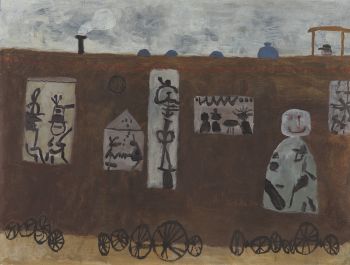
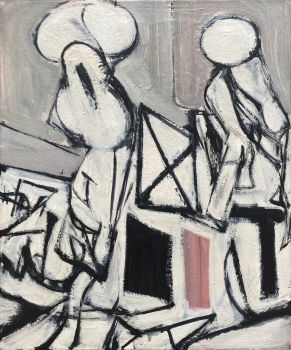
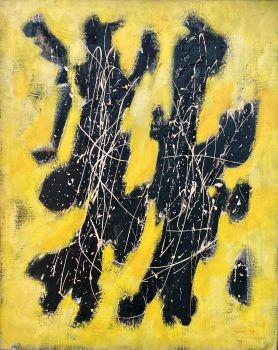
Silvano Bozzolini (Fiesole, Italy, 1911 – Paris, 1998) was an Italian artist who made a consistent and substantively strong contribution to the development of geometric abstraction in the twentieth century. His oeuvre lies at the intersection of painting and printmaking and is closely linked to the post-war abstract art scene in Paris.
Bozzolini studied at the Accademia di Belle Arti in Florence and continued his education at the Académie des Beaux-Arts in Paris, where he settled permanently. In 1947, he created his first abstract work, a decisive moment that marked the beginning of a long-term artistic commitment to abstract, geometric compositions.
In Paris, Bozzolini maintained close contacts with other artists working within the geometric-abstract tradition. He moved within an international network of abstract artists and was on friendly terms with, among others, Alberto Magnelli, a key figure in concrete and geometric abstraction. This exchange contributed to the clarity and discipline of Bozzolini's visual language, in which form, rhythm, and structure are central.
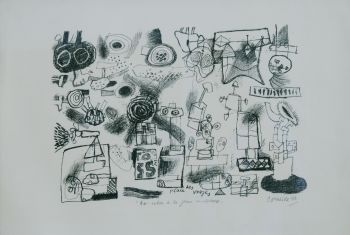
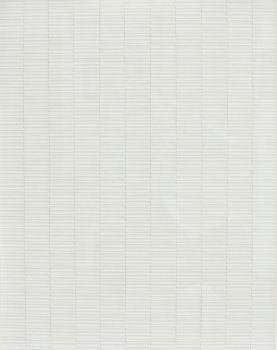
In addition to his painting, Bozzolini worked as a graphic artist, specializing in woodcuts and linocuts. These techniques were not only an important part of his artistic practice but also provided him with a source of income. His graphic work is characterized by the same formal precision and abstract clarity as his paintings.
Silvano Bozzolini exhibited internationally, with exhibitions in Paris, Sofia, Milan, and Lausanne. His work is valued today as a representative example of post-war European abstraction, in which Italian roots and the Parisian avant-garde converge in a restrained and balanced formal language.
Artworks
Filter Artworks
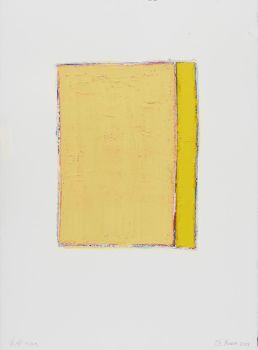
1 artwork for sale by Silvano Bozzolini