About the artist
Marinus van Raalte (Rotterdam, 1873 – Bergen-Belsen, 1944) was a Dutch painter and draughtsman whose oeuvre forms a compelling combination of impressionistic refinement and Jewish cultural roots. He was born into a liberal Jewish family and developed into a gifted artist with a great sensitivity to light, atmosphere and everyday life.
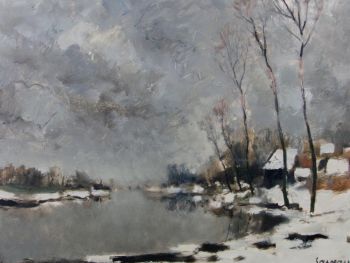
Van Raalte studied at the Rotterdam Academy of Fine Arts and at the Académie Julian in Paris, where he came into contact with French Impressionism. His work therefore shows influences of this genre: loose brushwork, nuanced colour effects and attention to the effects of light. Yet his themes remained rooted in Dutch life — he painted cityscapes, still lifes, portraits and interiors, often with a subdued melancholy.
At the beginning of the twentieth century, Van Raalte settled in Amsterdam, where he was part of the cultural and Jewish intellectual life. His work was exhibited regularly, including at Arti et Amicitiae, and he received critical acclaim for his refined technique and human approach. As a Jewish artist, he remained true to his cultural identity, without limiting himself to explicitly religious themes.
During the Second World War, Van Raalte was deported because of his origins. He died in 1944 in the Bergen-Belsen concentration camp. His death marked the tragic end of an artist who belonged to the forgotten voices of Dutch painting. His work is a silent testimony to a rich artistic life, imbued with sensitivity, craftsmanship and a silent force that lives on despite everything.
Artworks
Filter Artworks
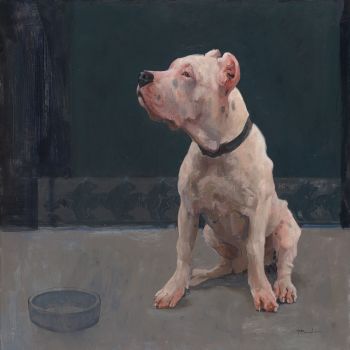
1 artwork for sale by Marinus van Raalte