About the artist
Jozef Cantré (Ghent, 26 December 1890 – Ghent, 29 August 1957) was a Flemish sculptor, draughtsman and graphic artist, and is considered one of the key figures of Flemish expressionism and the modernisation of art in Belgium in the interbellum. His oeuvre is characterised by a powerful simplicity, a sober but monumental formal language and a deep human involvement.
Cantré was born in Ghent into an artistic family and took lessons at the Royal Academy of Fine Arts. He developed his own visual language at an early age, inspired by primitivism, medieval sculpture and the modern movements of his time. During the First World War he fled to the Netherlands, where he came into contact with other Flemish artists in exile, such as Frits Van den Berghe, Gustave De Smet and Frans Masereel. This period was crucial for his artistic development: he became familiar with expressionism and innovative graphic techniques.
His graphic work – mainly woodcuts and etchings – is particularly influential. Cantré made penetrating, expressive prints with social themes: labour, the daily life of simple people, but also poverty and suffering. His style is powerful, sometimes raw, with strong lines and a direct expressiveness that is reminiscent of German expressionists and woodcarving from non-Western cultures.
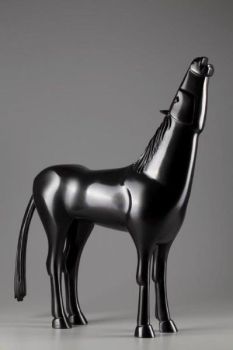
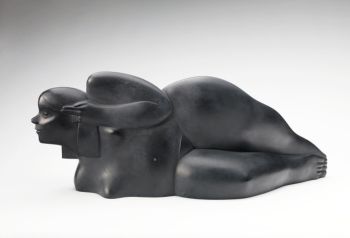
As a sculptor he developed a monumental formal language with great attention to volume and rhythm. His sculptures are often stylised and sober, but radiate a deep human dignity. He sculpted figures that had something solemn, almost timeless, and knew how to place a strong emotional charge in their simplicity. In addition to free work, he also made commissions for public buildings and monuments.
After the war he returned to Ghent and became a central figure in artistic life. He was co-founder of the art group "De Vijf" and involved in progressive magazines and artists' associations. As a teacher at the Ghent Academy of Fine Arts, he exerted a great influence on young generations of artists and helped modernize Flemish sculpture and graphics.
Throughout his career, Jozef Cantré continued to search for an art that was both contemporary and universal, rooted in man and his fate. His work testifies to social concern, but also to a striving for formal harmony and inner strength. Today, he is considered one of the most important Flemish sculptors and graphic artists of the 20th century, and a pioneer of the renewal of art in Flanders.
Artworks
Filter Artworks
1 artwork for sale by Jozef Cantré