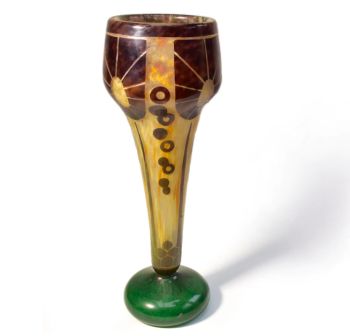
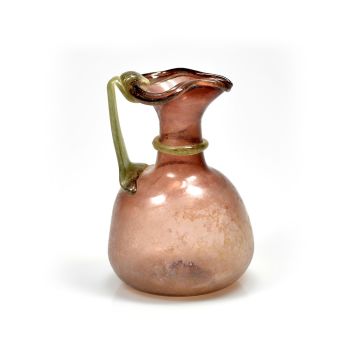
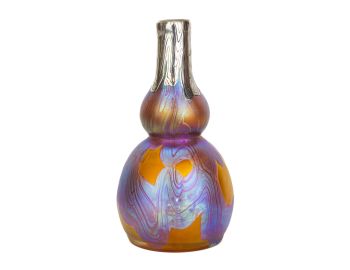
Johann Loetz Witwe – Phänomen Genre 1/473 vase 1901 - 1902
Johann Loetz (Lötz) Witwe Klostermühle
Verre
25 cm, ø 13 cm
ConditionExcellent
€ 5.950
Antiques Emporium
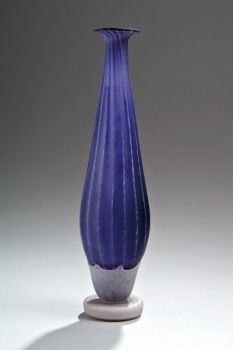
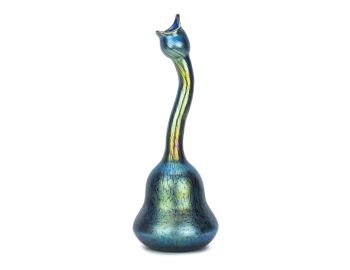
- Sur l'oeuvre d'artThis impressive vase by Johann Loetz Witwe, one of the most important producers of Jugendstil glass from Bohemia, is executed in Phänomen Genre 1/473 and blown in the refined ground color pink. The vase has an elegant calabash shape with a flat, folded rim, a form that lends itself perfectly to this Phänomen Genre.
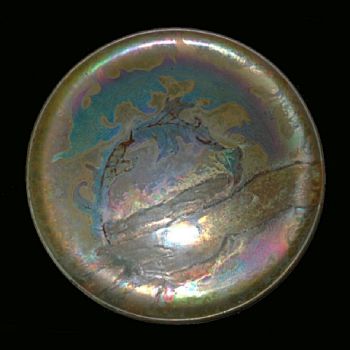
The lower section of the body is richly decorated with iridescent spots, beautifully distributed across the surface and shimmering in silver and purple hues. The rest of the surface is subtly covered with a light silver iridescence, which enhances the depth and vibrancy of the pink ground color.
The vase measures 25 cm in height and bears the signature “Loetz Austria” in the pontil. The production drawing of this specific model has unfortunately not been preserved, most likely lost during the major fire in the Loetz factory around 1902.
Due to the exceptional way in which this glass interacts with light, it is nearly impossible to capture the true color of the vase in photographs. The pink ground color shifts dramatically depending on the angle and intensity of the light, constantly revealing new aspects of its character and play of colors. Moreover, the iridescent hues appear far stronger and more vibrant in reality than visible in the photos, making the object all the more impressive when viewed in person.
Loetz in context
The glassworks Johann Loetz Witwe, located in Klostermühle (Bohemia), stood at the very pinnacle of European glass art around 1900. The company gained international acclaim for its innovative iridescent glass, in which metallic sheen and deep colors are harmoniously combined. Their Phänomen Genre décors, such as this example, rank among the most iconic creations and display a masterful balance between artistic design and technical innovation.
At the 1900 Paris World Exhibition, Loetz was internationally recognized alongside Louis Comfort Tiffany, firmly establishing its reputation as a leading producer of Art Nouveau glass. Today, Loetz objects are represented in major museum collections such as the MAK in Vienna and the Metropolitan Museum of Art in New York, and they belong to the most coveted pieces of Jugendstil glass on the art market. - Sur l'artiste
La verrerie Loetz a existé à Klostermuhle, en Autriche, pendant un peu plus de cent ans, à partir de 1840. Mais son apogée a eu lieu du vivant de Max Ritter Von Spaun, petit-fils du premier Johann Loetz qui avait fondé l'entreprise.
Von Spaun a repris l'entreprise en 1879 et l'a dirigée jusqu'en 1908, un an avant sa mort. Il est assisté d'Eduard Prochaska, son spécialiste technique, et ensemble ils inventent, conçoivent et produisent toute une série de merveilleux nouveaux types de verre, en déposant plusieurs brevets et en remportant des prix dans toutes les grandes expositions mondiales des années 1890 et des premières années de le nouveau siècle.
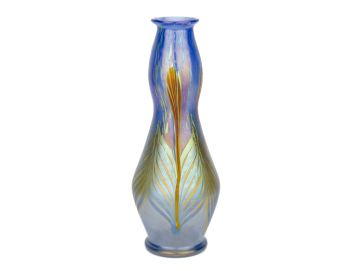
La société Loetz figurait parmi les leaders du design Art Nouveau et en particulier du verre d'art irisé. Le verre "Papillon", comme le vase de gauche, est parfois appelé aujourd'hui verre "à tache d'huile". Une autre coloration préférée de Loetz était le verre irisé avec des traînées tirées appelé verre « Phenomenon ».
Il y avait des vases irisés avec des rubans de couleurs métalliques enroulés sur la surface, et de nombreux motifs spectaculaires avec des traînées appliquées de belles couleurs, ou simplement retirés du corps du verre pour former des poignées ou une décoration.
Vers 1900, la société a commencé à collaborer avec des designers extérieurs et de grands artistes ont conçu des pièces pour Lotz, notamment Joseph Hofmann, Koloman Moser, Maria Kirchner et Hofstatter.
En 1908, Loetz a été repris par le fils de Max Von Spaun, également appelé Max, et bien qu'il ait connu des difficultés financières (faillite en 1911 et à nouveau en 1931), il y avait plusieurs grands designers dont le travail a été produit par Loetz au cours de ces années et à travers l'art période déco. Ceux-ci comprenaient Adolf Beckert et Michael Powolny.
Êtes-vous intéressé par l'achat de cette oeuvre?
Artwork details
Related artworks
Johann Loetz (Lötz) Witwe Klostermühle
Johann Loetz Witwe – Phänomen Genre 8065 – Thea1899 - 1900
Prix sur demandeAntiques Emporium
Johann Loetz (Lötz) Witwe Klostermühle
Johann Loetz Witwe – Phänomen Genre 1/18 vase1901 - 1905
Prix sur demandeAntiques Emporium
Johann Loetz (Lötz) Witwe Klostermühle
Johann Loetz Witwe - Phänomen Genre 7773 – Orange1900 - 1910
Prix sur demandeAntiques Emporium
1 - 4 / 8René Lalique
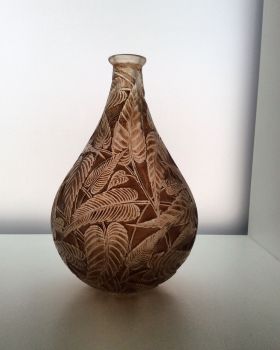
Un ancien vase 'Bluets' conçu par René Lalique (1860-1945)1910 - 1920
Prix sur demandeLennart Booij Fine Art and Rare Items
Daum Nancy
Daum Nancy – Tall Bryones / Bryonia dioica vase with applied berries1902 - 1907
Prix sur demandeAntiques Emporium
1 - 4 / 24- 1 - 4 / 24
Johann Loetz (Lötz) Witwe Klostermühle
Johann Loetz Witwe – Phänomen Genre 8065 – Thea1899 - 1900
Prix sur demandeAntiques Emporium
1 - 4 / 24- 1 - 4 / 24
Daum Nancy
Daum Nancy – Tall Bryones / Bryonia dioica vase with applied berries1902 - 1907
Prix sur demandeAntiques Emporium
Johann Loetz (Lötz) Witwe Klostermühle
Johann Loetz Witwe - Phänomen Genre 7773 – Orange1900 - 1910
Prix sur demandeAntiques Emporium
Johann Loetz (Lötz) Witwe Klostermühle
Johann Loetz Witwe – Phänomen Genre 8065 – Thea1899 - 1900
Prix sur demandeAntiques Emporium
Johann Loetz (Lötz) Witwe Klostermühle
Johann Loetz Witwe – Phänomen Genre 1/18 vase1901 - 1905
Prix sur demandeAntiques Emporium
Artiste Inconnu
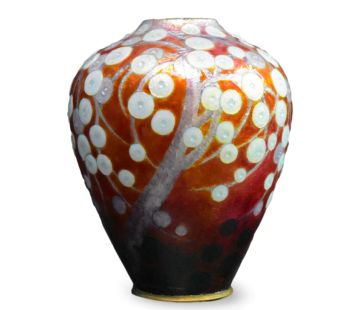
François-Théodore Legras – Tall “Fleurs de Pommier” apple blossoms vase1900 - 1909
Prix sur demandeAntiques Emporium
1 - 4 / 12