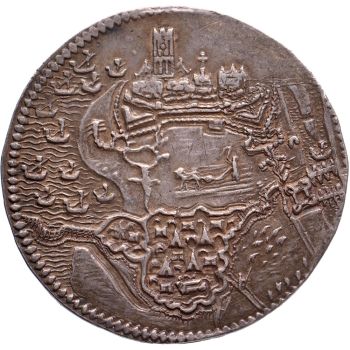
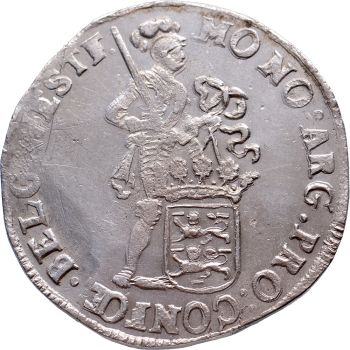
Koningsdaalder noodmunt Groningen by Artista Sconosciuto

Koningsdaalder noodmunt Groningen 1577

Artista Sconosciuto

Argento
Attualmente non disponibile tramite Gallerease

Jongeling Numismatics & Ancient Art

  • A proposito di opere d'arte
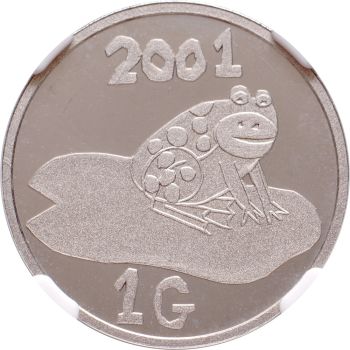
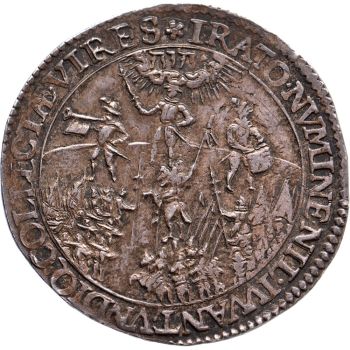
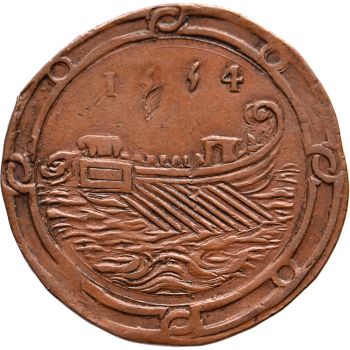
    Obverse: + NECESSITATE 4 FEB 1577, double-headed eagle with G above heads
    Reverse: blank

    EXTREMELY RARE

    In 1577, the city of Groningen was in the midst of the turmoil of the Eighty Years' War. Although the city was formally under the authority of Philip II of Spain, the political situation in the Netherlands was very tense. In 1576, the Pacification of Ghent was concluded, in which the regions worked together to expel foreign troops from their area. Yet there were still garrisons of foreign soldiers in several cities. There was also a garrison of Walloon mercenaries in Groningen that had to protect the city. However, these soldiers had not received pay for months. Unpaid troops posed a great danger in the sixteenth century, because they often made themselves guilty of plunder or mutiny. The city council therefore feared that the garrison would turn against the people. To reduce this risk, the city decided to temporarily strike emergency money. These emergency coins, including the Koningsdaalder of 1577, were intended to help pay the soldiers and thus maintain order in the city.

    Weight: 33.85 g
    Diameter: 47.5 mm
    Grade: Good very fine
    Reference: Delm. 179 (R2); vG. 98a; Vanhoudt 499 (R2); CNM 2.21.27
  • A proposito di opere artista

    Può succedere che un artista o un creatore sia sconosciuto.

    Alcune opere non sono determinate da chi sono state realizzate o sono state realizzate da (un gruppo di) artigiani. Esempi sono statue dell'antichità, mobili, specchi o firme non chiare o leggibili ma anche alcune opere non sono affatto firmate.

    Inoltre puoi trovare la seguente descrizione:

    •"Attribuito a …." A loro avviso probabilmente opera dell'artista, almeno in parte

    •“Studio di ….” o “Officina di” A loro avviso un'opera eseguita nello studio o nella bottega dell'artista, eventualmente sotto la sua supervisione

    •“Cerchio di…” A loro avviso un'opera del periodo dell'artista che mostra la sua influenza, strettamente legata all'artista ma non necessariamente al suo allievo

    •"Stile di..." o "Seguace di..." A loro avviso un'opera eseguita nello stile dell'artista ma non necessariamente da un allievo; può essere contemporaneo o quasi contemporaneo

    •“Modalità di…” A loro avviso un'opera nello stile dell'artista ma di epoca successiva

    •"Dopo …." A loro avviso una copia (di qualsiasi data) di un'opera dell'artista

    •“Firmato…”, “Datato…” o “Iscritto” A loro avviso l'opera è stata firmata/datata/inscritta dall'artista. L'aggiunta di un punto interrogativo indica un elemento di dubbio

    •"Con firma....", "Con data...", "Con iscrizione..." o “Riporta firma/data/iscrizione” a loro avviso la firma/data/iscrizione è stata aggiunta da qualcuno diverso dall'artista

Sei interessato ad acquistare questa opera d'arte?