About the artist
Vincent Laurensz. van der Vinne (born 11 October 1628 in Haarlem – died 25 July 1702) was a versatile artist, art theorist and traveller, who was part of the flourishing Haarlem art world of the Golden Age. Although less well-known than contemporaries such as Frans Hals or Jacob van Ruisdael, Van der Vinne made an important contribution to the painting, art practice and documentation of his time.
Born into a family of linen weavers, Vincent was trained at the famous Haarlem Guild of Saint Luke, where he was a pupil of Frans Hals – one of the greatest portrait painters of the seventeenth century. Yet Van der Vinne chose a different path than his master. He specialised in still lifes, flower arrangements, allegorical compositions and genre scenes with a keen eye for detail and symbolism.
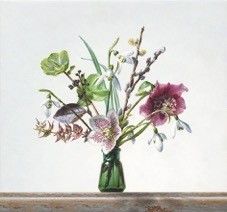
His work was characterised by realism and subtlety, often with religious or moralising undertones. In his flower arrangements, for example, we see not only splendor and pomp, but also signs of decay – a reference to the transience of life (vanitas). This double layer still makes his work intriguing.
Between 1652 and 1655, Van der Vinne undertook a daring journey through Germany, Switzerland and Italy, together with a group of other artists. This so-called "Grand Tour" was intended to gain experience and inspiration, but was not without danger. In Switzerland he was even imprisoned for his Protestant faith – a shocking experience that he described in detail in his travel reports.
These reports, which are now kept in the North Holland Archives, are of great importance to art historians. They form a rare and lively contemporary document of the travels, life and thoughts of a 17th-century artist. His diaries show not only his powers of observation, but also his sharp pen and critical mind.
Van der Vinne's contribution extends beyond his paintings. He was also an art historian avant la lettre, who made meticulous notes on Haarlem's art life. His notes on artists of his time, including biographical details, techniques and opinions, are an important source for later historians such as Arnold Houbraken, who used Van der Vinne as a source in his Groote Schouburgh (1718–1721).
Vincent Laurensz. van der Vinne remained active as an artist in Haarlem until old age, where he held a respected position within the guild. He had several children who also became artists, including his son Laurens van der Vinne, who continued his flower painting.
Although his name is not among the greatest of the Golden Age, appreciation for his work and writings is growing. His diaries, still lifes and morally charged scenes offer a unique window on the life of a painter who not only practiced art, but also deeply understood and documented it.
Artworks
Filter Artworks
1 artwork for sale by Vincent Laurensz van der Vinne

Vincent Laurensz van der Vinne
Portrait of a man and woman1640 - 1650
Price on requestArt Gallery Voûte
Related artworks for sale

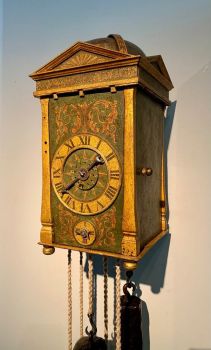
Unknown artist
Een Gotische zuidelijke Nederlanden wandklok1580 - 1590
Price on requestNico van den Assem restauratie


Unknown artist
Dutch School pair of equestrian paintings 1650 - 1750
Price on requestGallerease Selected


Peter Paul Rubens (follower of )
Portrait of a man dressed up as an oriental man1750 - 1850
Price on requestGallerease Selected
Vincent Laurensz van der Vinne
Portrait of a man and woman1640 - 1650
Price on requestArt Gallery Voûte