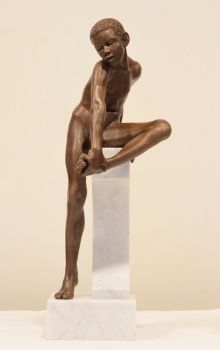
About the artist
Peter de Jong (The Hague, August 7, 1920 – ibid., November 4, 1990) was a Dutch sculptor and medallist, whose work is characterized by refined detailing and a strong emotional charge. Raised in The Hague during the interwar period, he developed an early fascination with form and material. He trained at the Royal Academy of Art in his native city, where he was taught classical sculpture techniques and the design of medals and reliefs.
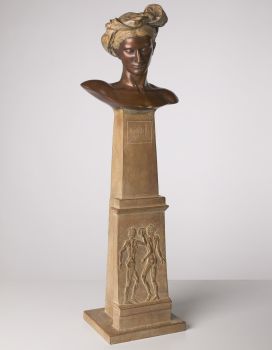
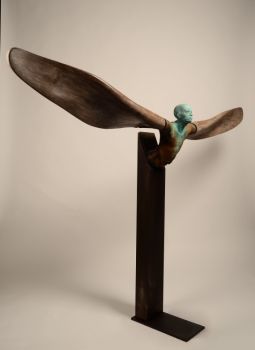
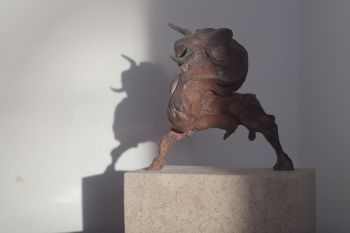
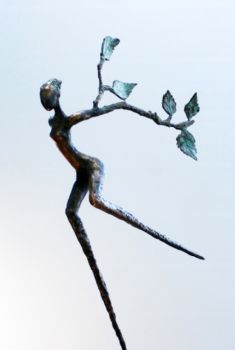
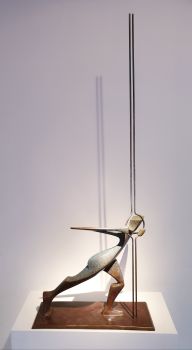
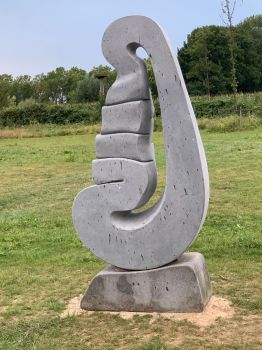
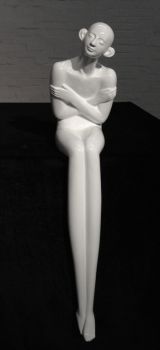
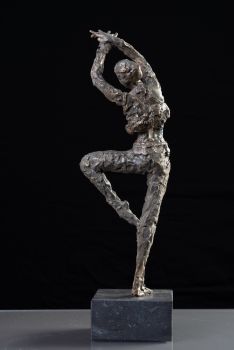
During his career, De Jong created both independent work and commissioned works for public spaces. His sculptures, often in bronze or stone, range from intimate portraits to monumental figures and commemorative sculptures. As a medallist, he achieved great expressiveness in a small format, combining symbolism and refined design.
His style remained rooted in figuration, yet exhibited a subtle stylization that gave his work a timeless quality. He had a keen eye for proportions and was able to capture human emotions and stories in materials without excessive expression. In addition to his artistic practice, De Jong was involved in artists' associations and participated in numerous exhibitions at home and abroad.
Peter de Jong's oeuvre bridges the gap between traditional craftsmanship and personal expression. To this day, his work can be found in museum collections, with private collectors, and in public spaces. His legacy reveals an artist who, with skill and sensitivity, forged sculpture and medallions into a refined whole.
Artworks
Filter Artworks
1 artwork for sale by Peter de Jong